What the cycle is
The Marquis de Condorcet, writing in the 1780s, proposed a test for collective decisions: the winner of an election should be the option that beats every other option in a direct, head-to-head majority comparison. An option that passes this test is called the Condorcet winner. Most of the time one exists, and most voting systems either find it or come close. The problem Condorcet also identified is that sometimes no such winner exists at all.
Suppose three voters are ranking three options — call them A, B and C. The first voter prefers A to B to C. The second prefers B to C to A. The third prefers C to A to B. Every preference is individually rational and consistent. Yet when you count the pairs, A beats B by two votes to one, B beats C by two to one, and C beats A by two to one. The group simultaneously holds three majority preferences that form a loop. There is no option that beats all others; there is only a cycle.
This is not a quirk of the numbers chosen for the example. It is a structural possibility that appears whenever three or more options compete and voters hold sufficiently varied preferences. The French mathematician's own treatise on elections showed the geometry: preference orderings can distribute across a group in ways that produce no consistent collective ranking at the top, even when every individual ranking is perfectly coherent.
Why agenda order becomes the real decision
The cycle would be merely an intellectual curiosity if it stayed hidden. The danger is that whoever controls the agenda can exploit it to manufacture any preferred outcome by choosing which options are compared, and in what sequence.
Imagine a committee that must choose among A, B and C, and the underlying preferences produce the cycle above. If the chair first pits A against B, A wins; then A against C, and C wins — final result, C. But if the chair instead runs B against C first, B wins; then B against A, and A wins — final result, A. The same electorate, the same preferences, a different winner, simply by reordering the votes. The agenda-setter has effectively decided the outcome without ever casting a deciding ballot.
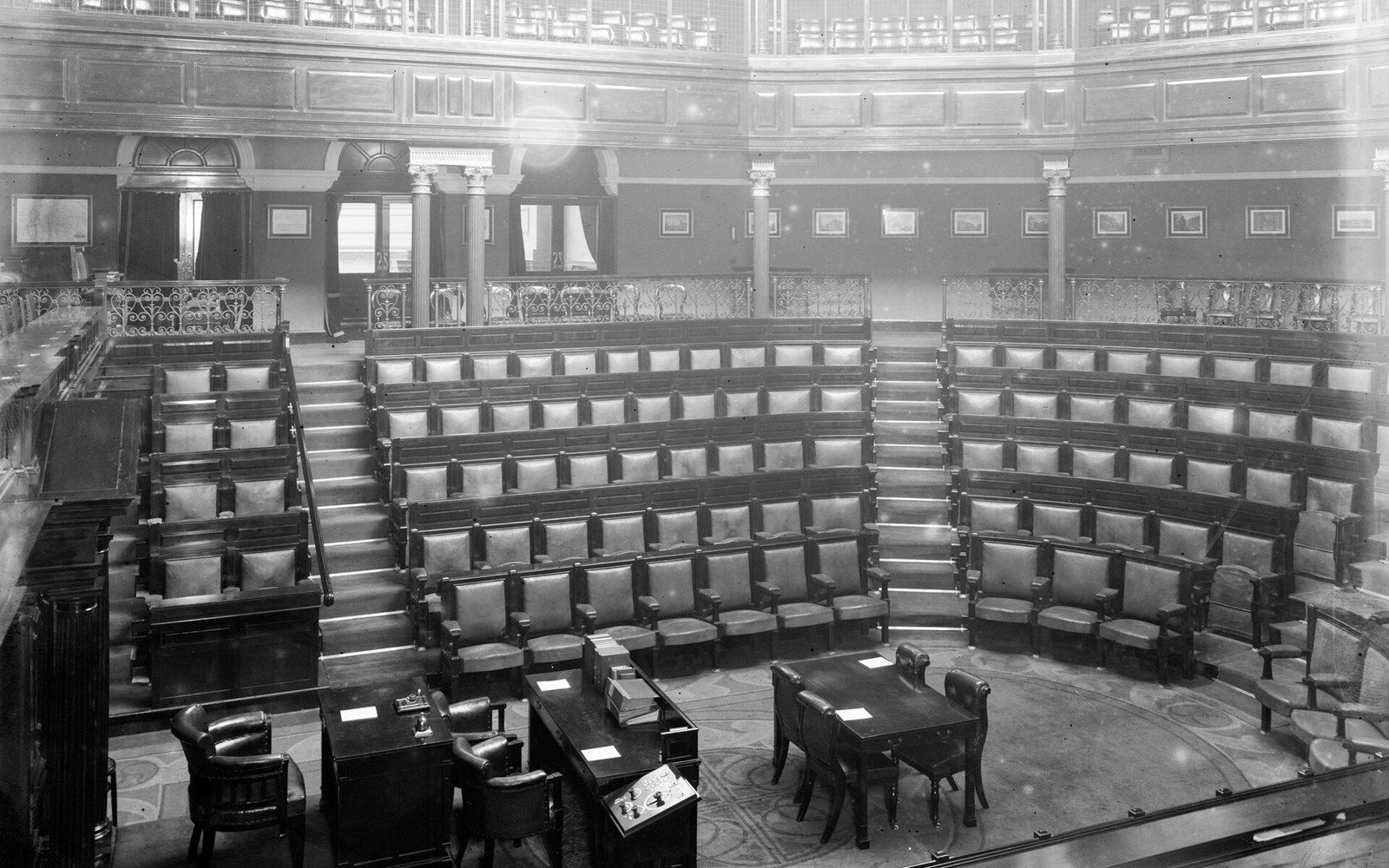
This is not merely theoretical. Legislative bodies that vote on amendments in sequence — a common procedure in many parliaments — are exposed to exactly this dynamic whenever preferences cycle. Strategic actors who know the underlying preferences can propose amendments or motions specifically to navigate to their preferred destination. The procedure that looks like collective deliberation is, in a cycle, a mechanism for laundering an individual choice through the appearance of majority rule.
What can be done, and what cannot
Several responses exist, none of them fully satisfying. One is to restrict the agenda in advance — fixing a canonical order of comparison that no individual can alter. This removes the manipulation but replaces it with an arbitrary structural choice: the fixed order now does the deciding instead of the chair. Another response is to look for a near-winner: the option that loses by the smallest margin in its worst pairwise matchup (known as the minimax (Simpson–Kramer) solution). This narrows the field but does not always produce a single answer.
Some scholars have argued that cycles are rare in real electorates because voters tend to share enough common reference points — a left–right axis, for example — that their preferences rarely span the geometry required. On a single ideological dimension, a Condorcet winner almost always exists (this is the median voter result). Add a second dimension of disagreement, and cycles become far more likely.
The deeper point is that Arrow's result generalises the problem: no ranked voting method can guarantee consistency under all possible preference distributions. The Condorcet cycle is the most vivid concrete illustration of why. It shows that majority rule is not a self-contained decision procedure. It needs supplementary rules — about which comparisons to make, in which order — and those rules carry their own weight in deciding the outcome. Voting reveals preferences; the surrounding procedure shapes what those preferences are allowed to produce.
Legislative bodies that vote on amendments in sequence — a common procedure in many parliaments — are exposed to exactly this dynamic whenever preferences cycle.