How delay becomes power
Every legislature runs on a clock. A bill that is never voted on fails as surely as one that is defeated, which means that any minority willing to eat time can, in principle, kill legislation without ever winning a division. The most celebrated instrument is the filibuster — a term rooted in nineteenth-century American political slang, derived ultimately from a Dutch word for freebooter — in which one or more members hold the floor through continuous speech. The United States Senate made the technique famous: before 1917 it had no closure rule at all, leaving a determined minority free to talk indefinitely. Strom Thurmond's solo speech against the Civil Rights Act of 1957, lasting over twenty-four hours, remains the longest individual filibuster on record.
But extended oratory is only one tool. Procedural delay also lives in the repeated calling of quorum, the introduction of endless amendments, the demanding of roll-call votes on routine motions, and the careful exploitation of adjournment procedures. Each move individually costs minutes; strung together they can cost weeks. Westminster-tradition parliaments know the phenomenon as "stonewalling" or "talking out" a bill: a private member's bill brought late in a sitting day can simply be spoken at until time expires and the House moves to other business. No single rule is broken; the aggregate effect is a veto.
Closure and its variants
Legislatures have devised several answers, each making a different trade-off between majority efficiency and minority protection.
The simplest is a straight closure motion — a vote to end debate immediately and proceed to the question. The United Kingdom House of Commons has used this since 1882, when the Irish Parliamentary Party's obstruction of coercion legislation forced the Speaker to impose a temporary closure rule that was quickly made permanent. A simple majority suffices, but the Speaker retains discretion to refuse a closure motion if debate has been inadequate — a safeguard against pure steamrolling.
The supermajority threshold is the other common solution. The U.S. Senate's cloture rule, introduced in 1917 and revised to its current form in 1975, requires three-fifths of senators duly chosen and sworn — sixty votes in a chamber of one hundred — to end debate on most legislation. The threshold itself becomes the political terrain: a minority of forty-one can sustain a filibuster indefinitely, so negotiations over a bill are often really negotiations over whether sixty votes exist to force a vote at all.
The guillotine — formally, an allocation-of-time order — takes a more surgical approach. Rather than waiting for obstruction and then cutting it off, the government schedules in advance how long each stage of a bill's consideration will last. When the clock expires, debate ends and votes are taken on everything outstanding, whether or not it has been discussed. The UK Parliament has used this mechanism since the 1880s; the EU Council and European Parliament employ analogous time-allocation tools in their own procedures. Critics note that guillotines can leave large sections of complex legislation unexamined — the remedy for obstruction becomes a different form of incompleteness.
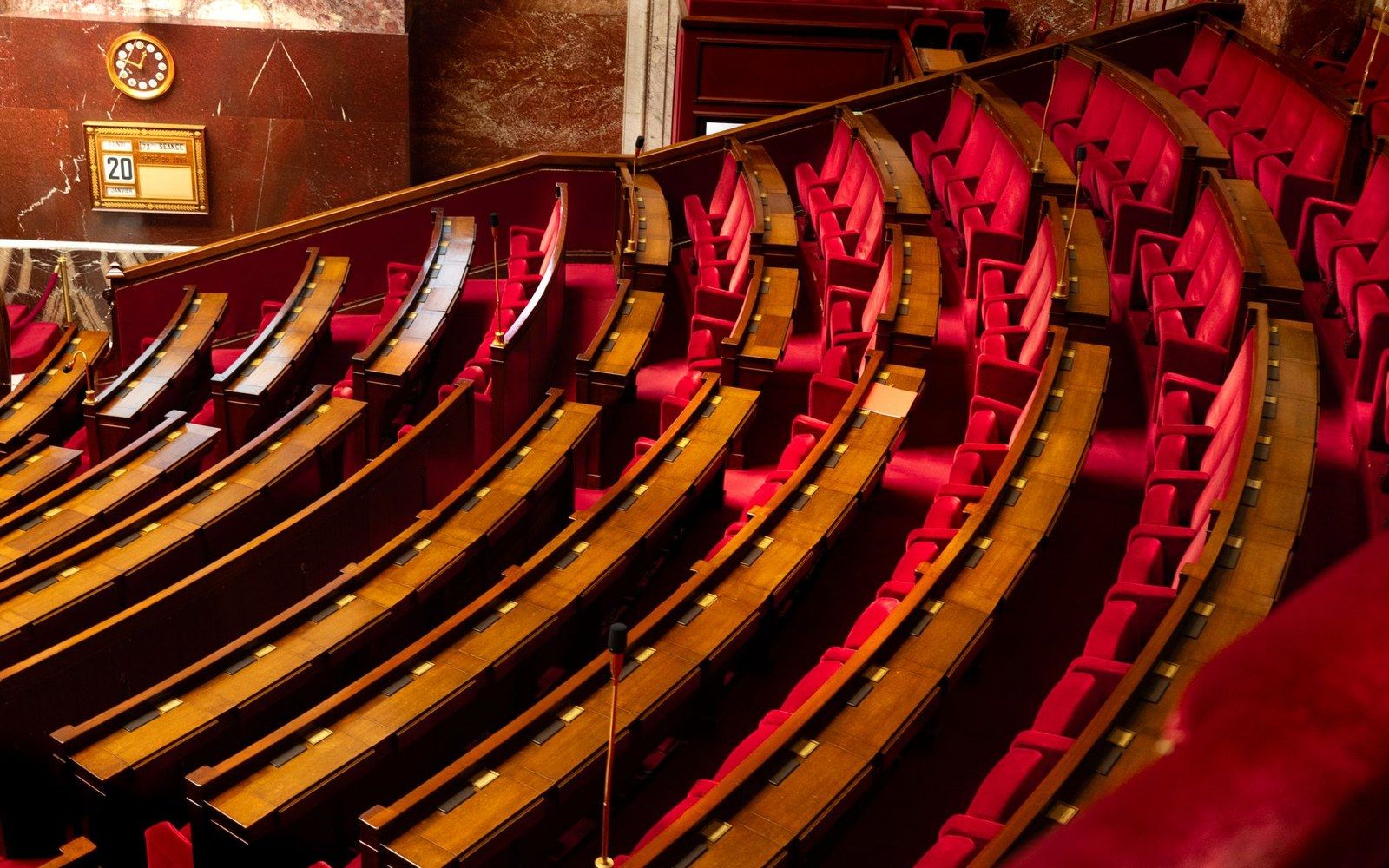
Some chambers address the problem architecturally. The French Assemblée nationale gives the government the power under Article 44.3 of the Constitution to force a single vote on a text as a whole, accepting or rejecting a government-chosen version with no further amendments permitted — a procedure known as the vote bloqué. It shifts the asymmetry entirely: the minority loses not just the ability to delay but the ability to amend.
What all these devices share is an acknowledgement that unlimited debate is not the same as good debate. The minority's right to be heard and the majority's right to eventually decide are both legitimate; closure mechanisms are the institutional attempt to honour both without giving either side an absolute weapon.
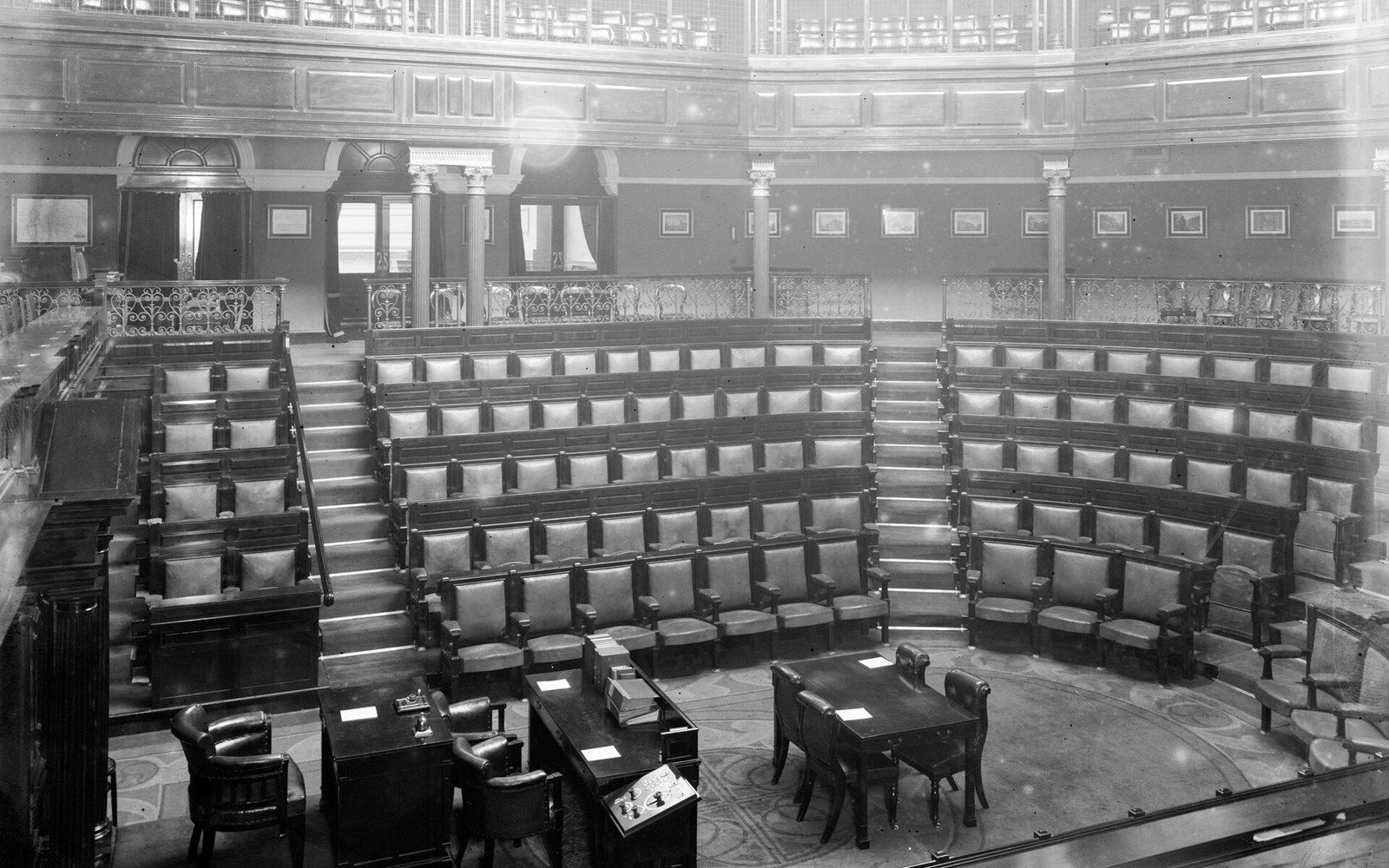
Rather than waiting for obstruction and then cutting it off, the government schedules in advance how long each stage of a bill's consideration will last.