A legislature can fill its chamber with elected members, but without a quorum — the minimum number that must be present before any business is legally valid — every vote taken means nothing. Quorum is simultaneously one of the most technical and most politically combustible features of parliamentary procedure, because setting the number is easy and enforcing it is not.
The rule and what it does
Most constitutions and standing orders fix quorum as a fraction of the full chamber. The United States House of Representatives requires a simple majority of its membership — currently 218 of 435. The United Kingdom House of Commons has set its quorum at 40 for most purposes, an exceptionally low figure relative to its 650 seats; for certain divisions the requirement rises to specific thresholds written into procedure. The Indian Lok Sabha requires one tenth of its membership to be present. These numbers are not arbitrary; they reflect a judgment about what majority of members must be available before it is fair to bind the whole body.
The word itself descends from the Latin quorum, meaning "of whom" — it appeared in the commission letters that established English justices of the peace, specifying which named justices had to be among those present before the commission's powers were valid. Parliamentary usage borrowed the concept and generalised it from named individuals to raw numbers.
When quorum is absent, the chair is obliged to suspend or adjourn proceedings. A member who suspects that fewer than the required number are present may call for a quorum count — a formal request that the chair count heads or order a bell rung to summon members from nearby corridors and offices. In practice, many legislatures tolerate a thin chamber for debate while requiring a fuller house at the moment of voting, which is why quorum-call provisions and division bells exist as distinct mechanisms.
Too high, too low, and the deliberate breach
Set the quorum too high and you hand veto power to absenteeism. A sufficiently disciplined minority can kill legislation simply by staying away, not by voting against it. This tactic has a long history. In the American House of Representatives of the nineteenth century, quorum-breaking — called a "disappearing quorum" — was refined into an art: members present would refuse to answer to their names when a roll-call quorum was sought, so that the chair was forced to declare the body inquorate even though the room was visibly occupied. Speaker Thomas Reed ended the equivalent practice in the House in 1890 by ruling that members who were physically present could be counted toward quorum whether or not they responded — a ruling that provoked uproar but held, and which survives in modified form in today's House rules.
The inverse problem is equally real. Too low a quorum allows a small faction to conduct business while the majority is absent, passing measures that a full house might reject. The House of Commons quorum of 40, persistently criticised as an invitation to thin attendance, permits legislation to proceed late at night before an almost empty chamber — a situation defended as efficient and attacked as undemocratic depending on one's position.
Some legislatures have tried a middle course: a quorum of one fraction for ordinary debate, a higher fraction for specified categories of business — constitutional amendments, treaty ratification, emergency legislation. This tiered approach acknowledges that not all decisions carry equal weight without holding routine proceedings hostage to full attendance.
When the floor empties on purpose
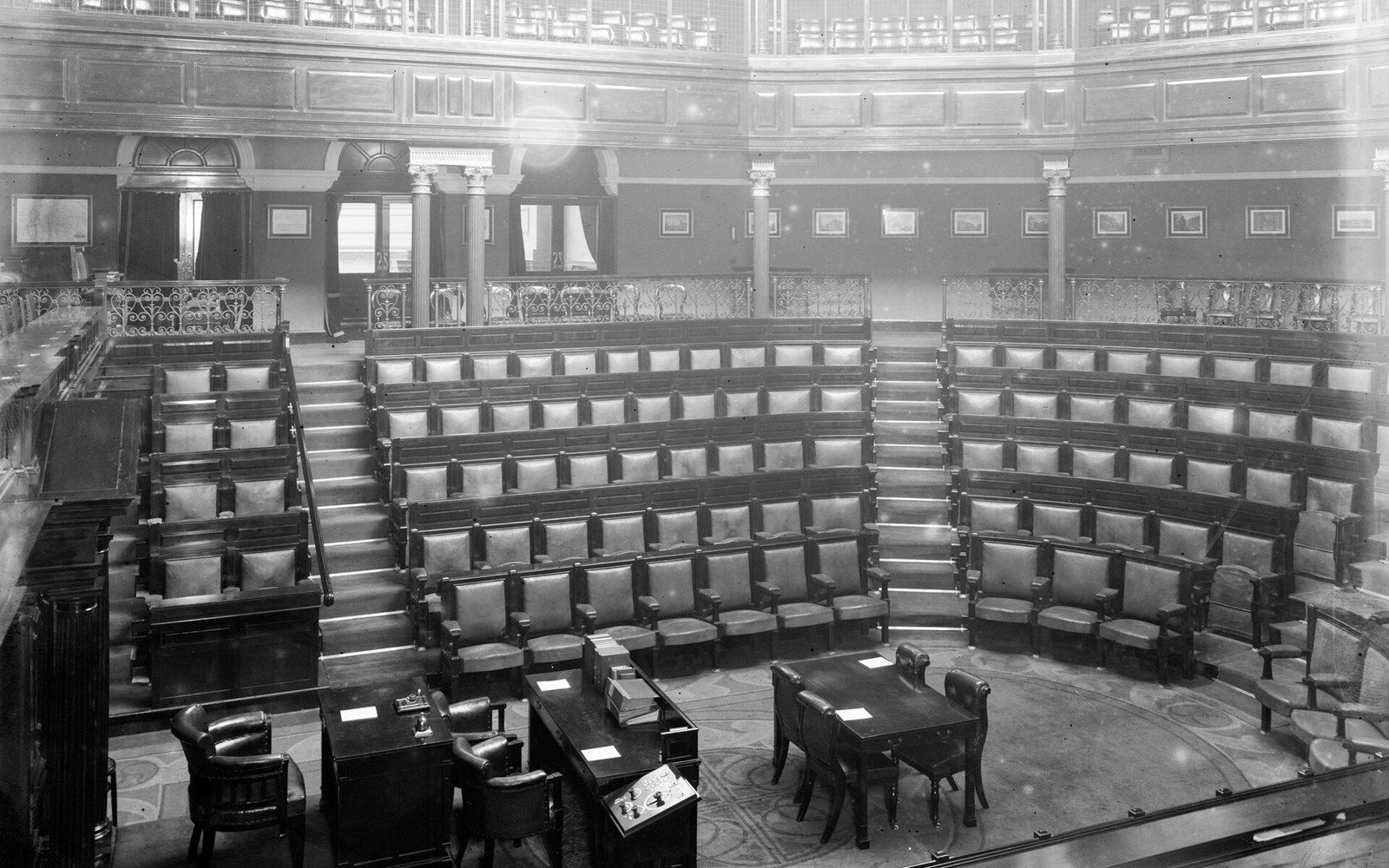
The most dramatic quorum manoeuvre is the organised walkout — members of one party physically leaving the building to deny the majority its quorum and halt a bill. Texas state legislators did this in 2003, and again in 2021, travelling out of state to deprive the chamber of a quorum specifically required under state rules. The tactic is available wherever quorum rules cannot be waived, and wherever the minority lacks any other mechanism to slow legislation. It is, in procedural terms, a form of debate and delay: not argument, but presence withheld as a blocking instrument.
The quorum rule exposes a structural tension that no legislature has fully resolved — between the principle that a representative body must actually be assembled to exercise its authority, and the practical reality that full attendance is never guaranteed and cannot be compelled without instruments the law is often unwilling to provide.
A sufficiently disciplined minority can kill legislation simply by staying away, not by voting against it.