In any counting system that redistributes preferences — the Irish single transferable vote, the Australian Senate, most preferential methods used in multi-seat contests — a transfer is the mechanism that carries a ballot from one candidate to another after its current destination is settled or eliminated. It sounds straightforward. The arithmetic underneath it is not.
Two events trigger a transfer. The first is elimination: a candidate at the bottom of the count is removed, and every ballot resting with them moves to whichever remaining candidate is ranked next. The second is a surplus: a candidate who has already passed the quota — the threshold of votes required to win a seat — holds more votes than they need, and the excess must be distributed rather than wasted. Elimination transfers are conceptually clean; every paper moves. Surplus transfers are where the real decisions begin.
The surplus is defined simply enough: votes received minus quota. But which physical ballots travel to carry that surplus? The candidate who reached quota may have received papers from several previous transfers, each arriving at different moments in the count and each expressing different lower preferences. Not all of those papers are equally "available" to transfer, and different counting systems resolve that ambiguity in fundamentally different ways.
Three methods, three answers
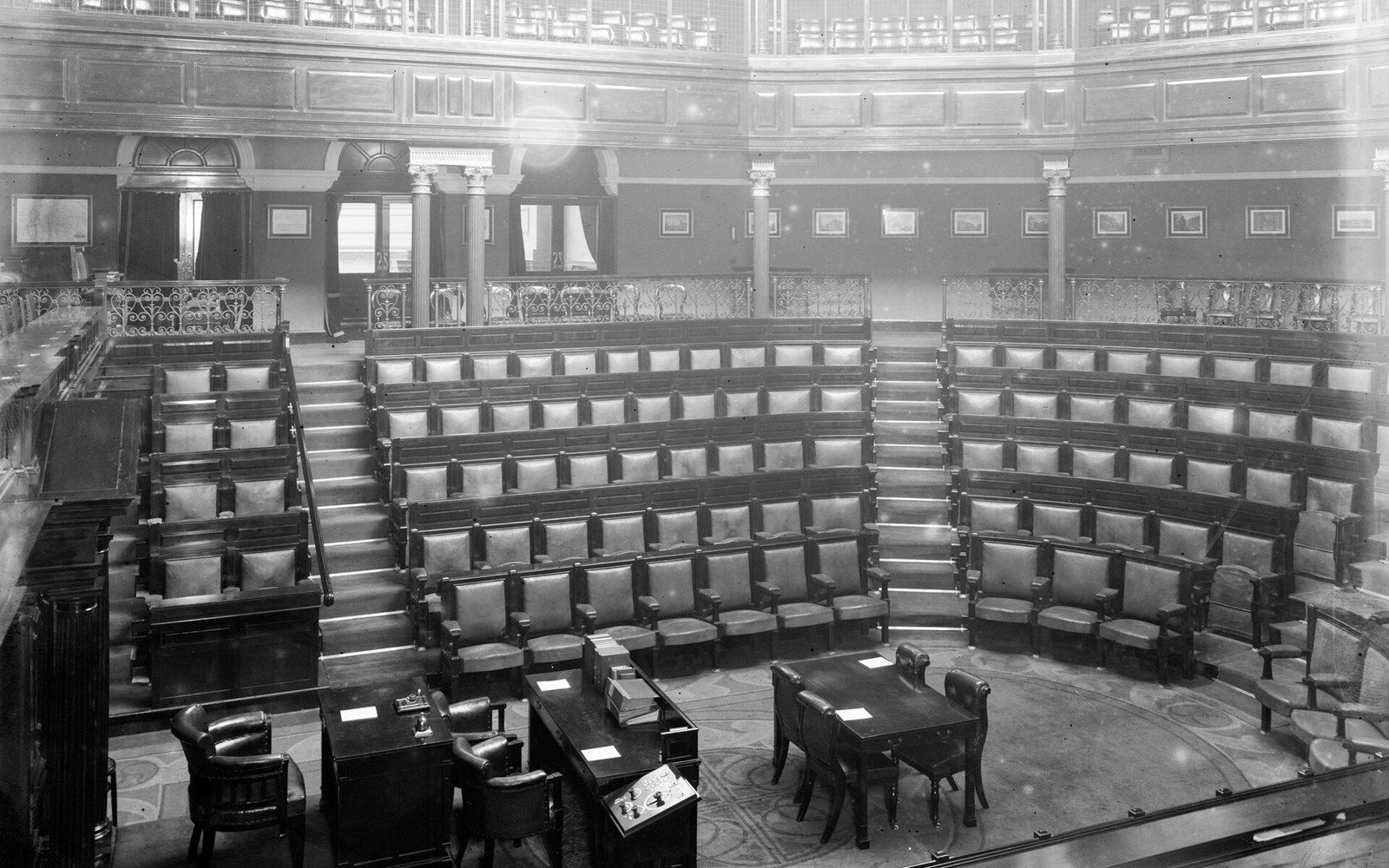
The oldest approach is random selection. After a candidate's tally passes the quota, counters physically shuffle the papers and draw out a random sample equal in size to the surplus. Those drawn papers transfer at face value; the rest stay. Ireland used random selection for Dáil Éireann elections well into the twentieth century. It is transparent but volatile: two identical sets of ballots could produce different outcomes depending on which papers happened to be drawn.
The Senatorial rules used in Ireland from the 1940s onward, and later codified in Australian Senate practice, replaced randomness with the Gregory method — named after the Victorian mathematician J. B. Gregory, who published the idea in 1880. Under Gregory, instead of physically selecting papers, every ballot in the pile is transferred at a fractional value. If the surplus is one-fifth of the total pile, every ballot moves at a transfer value of 0·2. The receiving candidates accumulate these fractional tallies, which are kept to several decimal places through the count and only rounded at the final stage. Nothing is left to chance; the outcome is the same every time the same ballots are counted.
Gregory is more reproducible than random selection but introduces its own complication: it applies the transfer value uniformly across all papers in the pile, regardless of when they arrived. The "last bundle" variant — used in some Australian state counts — applies the transfer value only to the most recently received batch of papers rather than the whole pile, on the theory that those are the papers whose lower preferences are actually being consulted. This narrows the calculation but can produce a different seat allocation than whole-pile Gregory from the same ballots.

The most precise version is Weighted Inclusive Gregory (WIGM), now used in Scottish council elections. WIGM applies an individually calculated transfer value to every single ballot paper depending on the value at which that paper arrived. A paper that itself transferred in at 0·6 contributes at 0·6 multiplied by the new transfer value; a paper that arrived at full value of 1·0 contributes differently. The result is mathematically consistent across the entire count and eliminates the distortions that accumulate when earlier fractional values are ignored. The price is complexity: the count requires software to be conducted at any practical speed.
Eliminated-candidate transfers, meanwhile, are less contested in method but still require a decision about order. When two candidates tie at the bottom, rules must specify whether the tie is broken by an earlier stage of the count, by lot, or by some other tiebreaker — and the choice can determine which of them is eliminated and, consequently, where their supporters' votes travel next.
Every transfer method is a different answer to the same question: whose preference actually counts when a vote moves on? Alternative vote in a single-member seat sidesteps the surplus problem entirely because only one candidate wins; in multi-seat preferential counting, where several candidates cross the quota, the transfer method is the count.
Nothing is left to chance; the outcome is the same every time the same ballots are counted.