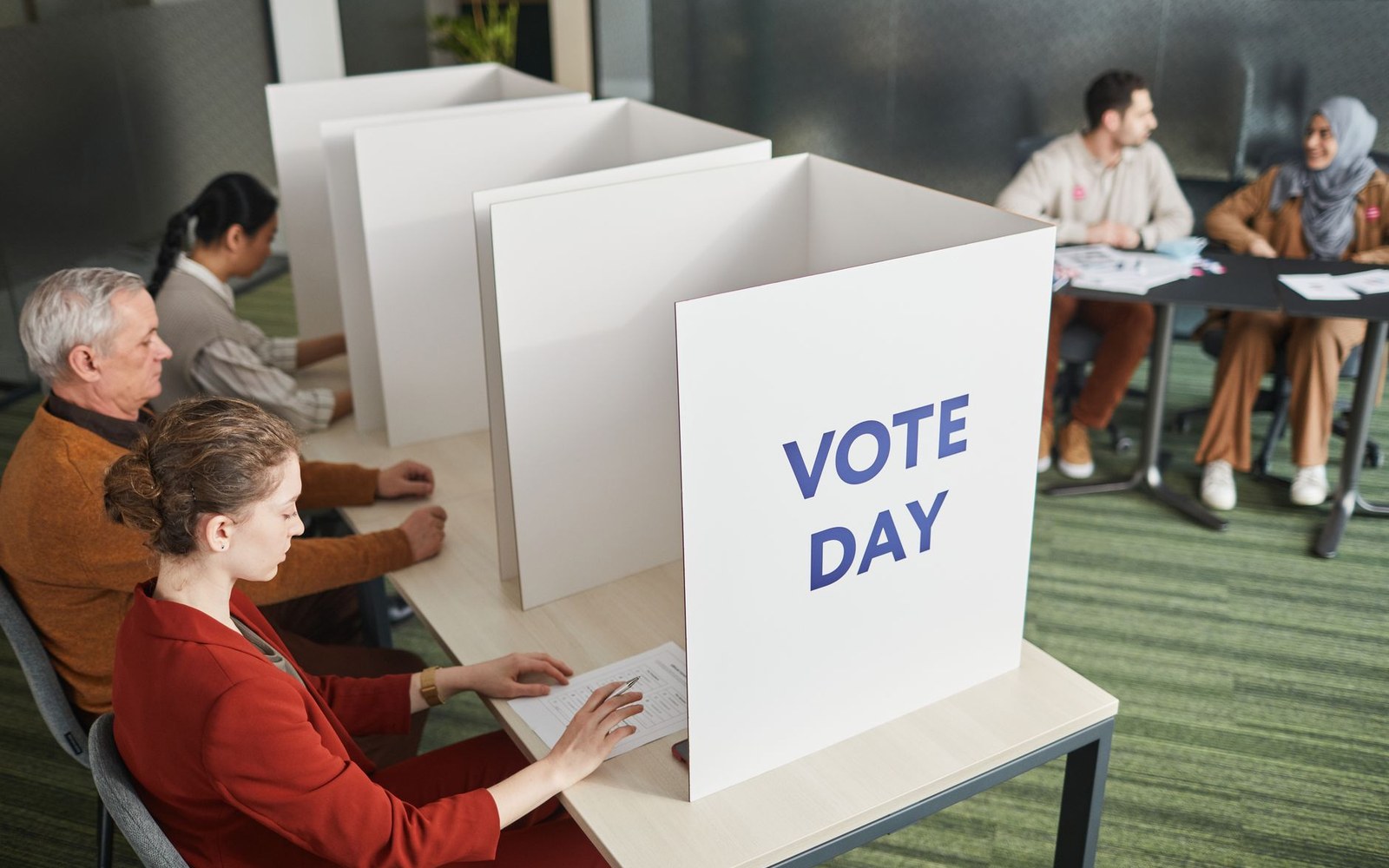
What the form does before anyone marks it
A ballot paper is a piece of legislation. Its wording is usually prescribed by statute or electoral regulation, and every element — the instruction line, the candidate list, the response area — is a design decision with a measurable downstream effect. Administrators who treat it as a clerical formality discover the error at the count, when a spike in spoiled papers traces back to something that could have been fixed at the printer.
The most consequential element is the instruction. "Vote for ONE candidate only" and "Place a cross (X) in ONE box only" are not equivalent. The second is more explicit about means as well as number, and studies of ballot usability testing — carried out in the United Kingdom, Australia and Canada among others — have consistently found that adding the method ("a cross") alongside the quantity ("one") reduces the rate of ambiguous marks. Where a jurisdiction uses ranking rather than a single mark, the instruction burden increases sharply: voters must be told what numbers to write, where to write them, and whether marking fewer preferences than there are candidates is permitted or will void the paper.
Column layout matters just as much. A ballot listing twenty candidates in a single narrow column forces voters to scan vertically through a long list under time pressure. Wrapping candidates into two or three columns reduces vertical travel but introduces a new risk: the reader's eye skips across a column break and marks the wrong row. The 2000 United States presidential election in Palm Beach County, Florida, demonstrated this in extreme form. The "butterfly ballot" — candidates spread across two facing pages with punch holes running down the centre — produced a pattern of overvotes and apparent mismarks that became the subject of multiple post-election analyses. The layout was legal, but the design was not user-tested in advance.
Response area design is a smaller but still real variable. A tick-box that is too small attracts marginal marks — strokes that clip the boundary and force an adjudicator to decide whether intent is visible. A box that is too large invites voters to write inside it as well as mark it. The geometric relationship between the candidate name and its associated box should leave no ambiguity about which box belongs to which name; this means consistent horizontal alignment and sufficient line spacing. Where the list is long, horizontal rules between candidates reduce row-skipping errors, particularly for voters with lower literacy or reading difficulties.
Where instructions fail and how jurisdictions have responded
The phrase "do not write anything else on this ballot" appears in various forms across different regulatory frameworks, and its presence reflects a real problem: write-in commentary, corrections and stray marks all require adjudication. In jurisdictions that define a spoiled paper strictly, a stray pen line in the margin can void an otherwise clear vote — and that outcome is highly sensitive to the exact wording of the counting rules rather than to voter intent.
Accessibility compounds every design choice. A ballot produced for a voter using a postal or absentee process may be printed on household equipment, reducing ink density and box clarity. Voters with visual impairments in jurisdictions that provide audio guides or tactile templates depend on a spatial correspondence between what they hear and where the physical response area sits. Any redesign that moves candidates relative to the template invalidates the accessibility tool.
Some jurisdictions now require usability testing before a ballot goes to print. The practice, long standard in commercial form design, asks a representative sample of voters to complete a draft ballot under observation. Errors, hesitations and spoiled test papers are treated as design defects to be corrected. The United Kingdom's Electoral Commission has published guidance along these lines; several American counties adopted comparable protocols after Florida 2000. The cost is modest relative to the cost of a disputed count.
The ballot paper sits at the hinge between the voter's intention and the formal record. Everything above it — registration, campaigning, turnout — is irrelevant if the form itself introduces noise between what a voter means and what a counter reads.
A ballot produced for a voter using a postal or absentee process may be printed on household equipment, reducing ink density and box clarity.